
We are using electricity for many purposes to make our tasks easier and fast to work. Electricity makes it possible to light our homes, roads, offices, markets and factories even after sunset. A power station provides us with electricity.
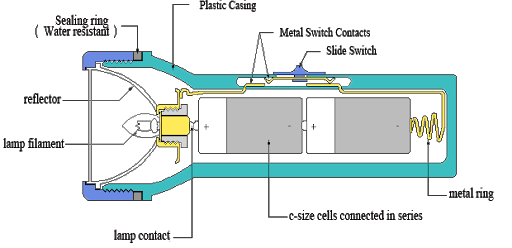
Electricity to the bulb in a torch is provided by the electric cell. Electric cells are also used in alarm clocks etc.
There is a positive (+) sign and a negative (−) sign marked on the electric cell metal cap is the positive terminal of the electric cell. The metal disc is the negative terminal. All electric cells have two terminals; a positive terminal and a negative terminal.
An electric cell produces electricity from the chemicals stored inside it. When the chemicals in the electric cell are used up, the electric cell stops working.
There are the thin wires that gives off light is called the filament of the bulb. The filament is fixed to two thicker wires, which also provide support to it.
The other thick wire is connected to the metal tip at the centre of the base. The base of the bulb and the metal tip of the base are the two terminals of the bulb. These two terminals are fixed in such a way that they do not touch each other. The electric bulbs used at home also have a similar design.
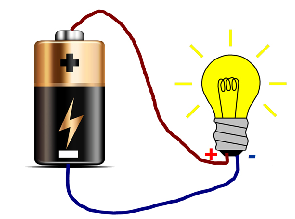
As we see here the wire connected one terminal of the electric cell to the other terminal through wires passing to and from the electric bulb.
The two terminals of the electric cell were connected to two terminals of the bulb. Such an arrangement is an example of an electric circuit. The electric circuit provides a complete path for electricity to pass (current to flow) between the two terminals of the electric cell.
A switch is a simple device that either breaks the circuit or completes it. The switches used in lighting of electric bulbs and other devices in homes work on the same principle although their designs are more complex.
Materials which allow electric current to pass through them are conductors of electricity. Insulators do not allow electric current to pass through them.
Conductors and insulators are equally important for us. Switches, electrical plugs and sockets are made of conductors. On the other hand, rubber and plastics are used for covering electrical wires, plug tops, switches and other parts of electrical appliances, which people might touch.